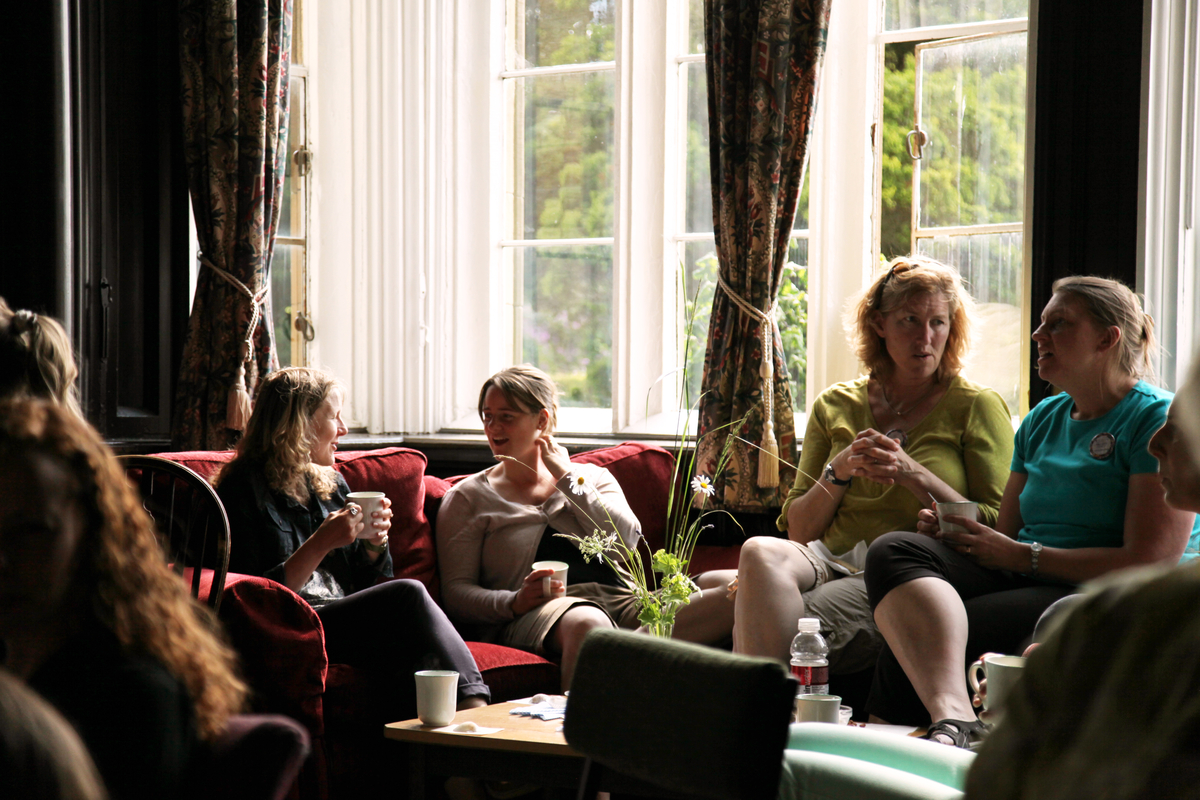
When I joined my first counseling group, I was careful to only share the safe, polished version of my story. While sitting in that circle for the first time, I thought I had a good grasp on the reason why I was there.
What I didn’t know was just how much I’d buried over the years, and I didn’t realize the full extent of the pain I was keeping from myself and others. After all, I wasn’t going to cry in front of people I’d just met or admit to things I barely had words to articulate.
But underneath the surface, the pain persisted and over time, and it became harder to carry. I spent years trying to ease my anxiety by rehearsing familiar verses and reading books on anxiety. I thought that doing more of the “right” things would give me peace. But what I needed most wasn’t more solitude. I needed people.
Healing in Community
Over the next four years, God, in his infinite wisdom, guided me to join three different counseling groups on my journey towards healing my anxious heart. With each group, I opened up a little more. What started as guarded participation slowly turned into vulnerable sharing.
In those moments of confession, something powerful shifted. I began to see that calming my anxiety didn’t come from having the perfect answers or quick fixes. It came through others listening to my story and sharing their own stories against the backdrop of the gospel.
The Bible speaks to this kind of community in James 5:16 where it says, “Therefore confess your sins to one another and pray for one another, that you may be healed.” Healing and confession are inseparable. But it’s more than just being honest about your struggles; it’s sharing the hard things in the presence of people who will speak God’s truth back to you. Hearing other believers acknowledge your identity in Christ silences fear and shame.
I like how Pure Desire group leader Ashley Jameson explains, “When we tell our story, it engages our head and our heart through the filter of our current reality. If we’re willing to deconstruct our history, we can start identifying where and why we started those behaviors.”
This is a process, and it often means confronting sin patterns and broken ways of thinking. It’s hard work, but in redemptive community, we’re not left to do the work alone. In counseling groups, we’re reminded that we are not the sum of our past mistakes or insecurities, but rather beloved children of God, made new in Christ.
This vulnerability is first modeled by the leader. In one group I was a part of, the leader shared his story of fear and anxiety, and something clicked in me as I listened. His struggle sounded a lot like mine. His confidence in God’s love and redemption challenged me to believe that healing was possible for me too.
The Gospel Is Central
The gospel is essential to the healing process because it changes how we see ourselves and others. When Christ died for us, he took on not just the punishment for our sin but the weight of our shame (Heb. 9:14). This knowledge gives us confidence in confession because, in doing so, we experience what Paul said in Ephesians 3:14, “That you, being rooted and grounded in love, may have strength to comprehend with all the saints what is the breadth and length and height and depth, and to know the love of Christ that surpasses knowledge, that you may be filled with all the fullness of God.” One way we experience the love of God is by living in open fellowship with other Christians.
Milton Vincent captures this truth beautifully: “The more open I am in confessing my sins to fellow-Christians, the more I enjoy the healing of the Lord in response to their grace-filled counsel and prayers. Experiencing richer levels of Christ’s love in companionship with such saints.”[1] Through the prayers, encouragement, and sometimes even rebuke of others, God speaks. He guides us. He comforts us. He strengthens us through the Spirit working in his people.
Join a Group and Find Healing
We were not designed to walk through our pain alone. While individual study, prayer—and biblical counseling when needed—are valuable, lasting transformation often happens when we step into community, the kind rooted in grace and truth. We were made for one another. God said from the beginning, “It is not good for man to be alone” (Gen. 2:18). That truth still stands today.
So, if you’re feeling stuck or overwhelmed by your struggles, consider this an invitation. Join a group. Share your story. Let others walk with you. Because in the context of a gospel-centered community, healing is not only possible, it’s promised. And it begins the moment you take the brave step of letting yourself be known.
[1] Milton Vincent, A Gospel Primer for Christians: Learning to See the Glories of God’s Love (Focus Publishing, 2011), 34.